
Today we’d like to introduce you to Steve GOOD.
Hi Steve, please kick things off for us with an introduction to yourself and your story.
It started, improbably, with a Craigslist job posting.
In 2007, I wasn’t looking to transform Five Keys into one the nation’s largest second-chance organizations—I was simply looking for my next role. I had just finished a chapter as a middle school principal in San Francisco and had previously worked as an executive in a national education organization. Like many people at that stage in their career, I was ready for something new.
What I found was unexpected: a posting for a principal position at a school operating inside the San Francisco County Jail.
I had no experience working with incarcerated individuals or in adult education. My background was in traditional K–12 education. But something about the opportunity intrigued me—the idea of running a school inside a jail, in partnership with the Sheriff’s Department. It felt different. It felt meaningful.
So I took the job.
Then came the reality check.
Once I got a look at the organization’s finances, I remember turning to my wife and wondering if I had made a mistake. At the time, Five Keys was small—just 12 employees, one school site, and a budget of roughly $2 million. At home, I had young twins. Stability mattered.
But I had already committed. So I stayed.
What followed wasn’t a straight line. It was a steady expansion of both the work and the vision. When I first arrived, Five Keys wasn’t a second-chance employer. That became part of the work—intentionally building it into what is now one of the largest second-chance employers in the nation.
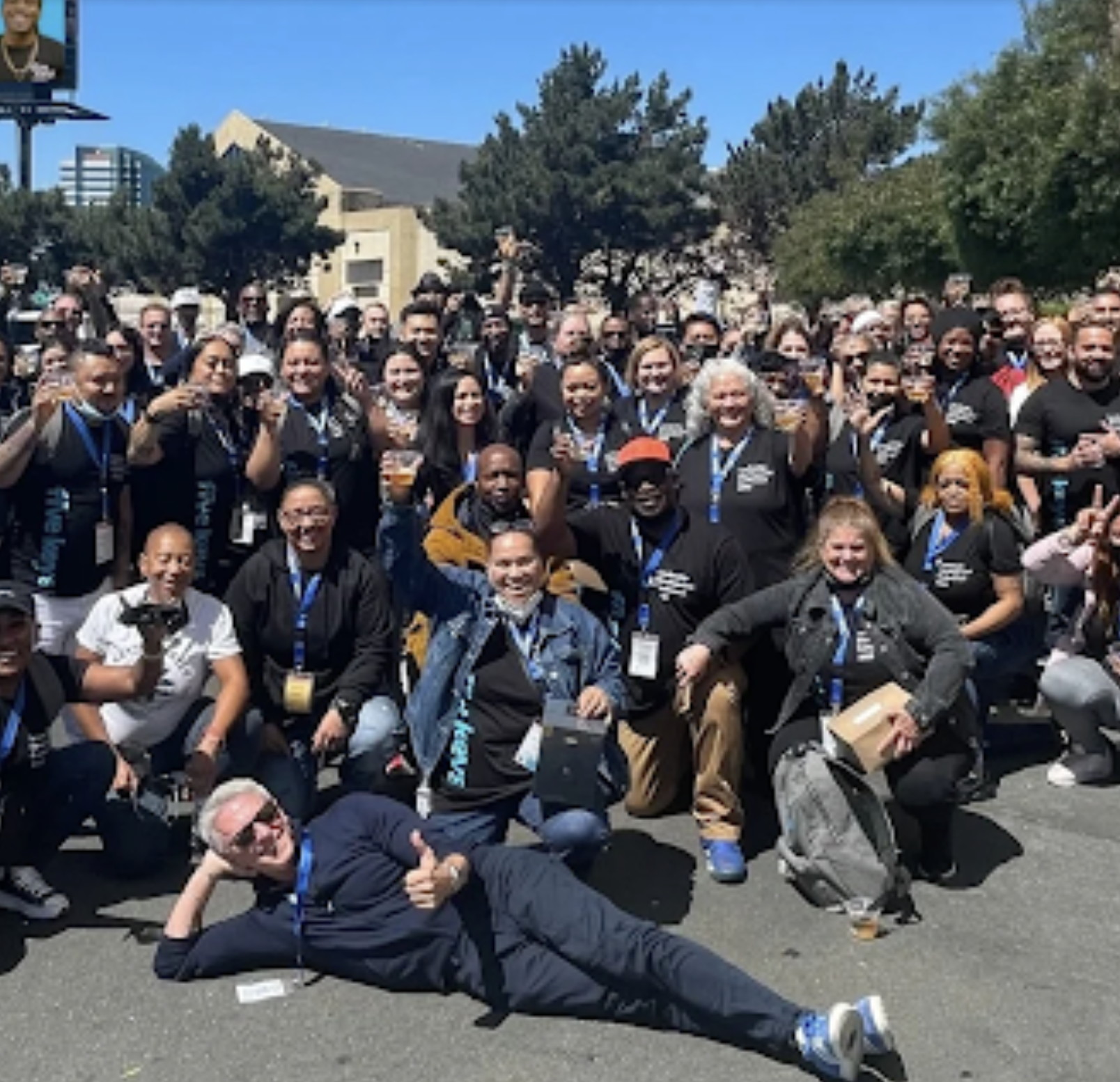
Today, Five Keys looks dramatically different. We operate with a $136 million budget and employ more than 1,200 people across California—about half of whom are formerly incarcerated. Our work spans 14 county jails, prison-based programs, more than 2,000 beds of supportive housing and shelter, and a broad range of workforce development and reentry services. We even operate a farm in Norco.
And yet, despite all that growth, I still think of us in very simple terms.
At our core, we are a workforce development organization. We take people coming out of jail and prison and provide real opportunities—training, living-wage jobs, and benefits like health insurance. We’re not just helping people get by—we’re helping them rebuild their lives.
In many cases, that transformation begins before release. Individuals enroll in our programs while still incarcerated, earn their high school diploma, transition through reentry support, and ultimately come to work for us. Some of our strongest staff started exactly that way.
It’s one of the things I’m most proud of.
Of course, none of this was built by one person. It reflects the work of an extraordinary leadership team, a deeply committed board, and the enduring vision of our founder, Sunny Schwartz.
That said, the work hasn’t always been easy.
In the early years especially, I heard a lot of skepticism. People would ask why we were investing in computers, education, and resources for individuals who were incarcerated when many families in the community were struggling to access
the same.
My answer has always been straightforward.
Everyone who is incarcerated is going to return to our communities. The question is: who do we want coming back?
Do we want individuals who have had the opportunity to grow, become employable, and rebuild their lives? Or individuals who have had no support and may return worse off?
For me, the answer is clear.
This work makes communities safer. It reduces crime. It saves millions of dollars in reincarceration costs. And it helps reunite families. Children of incarcerated parents are far more likely to end up in the system themselves—but when we interrupt that cycle, we change entire futures.
Today, we see that impact in the data. While recidivism rates can reach as high as 60 percent, outcomes for those connected to Five Keys are significantly lower—saving the state millions, if not billions, of dollars.
But beyond the numbers, it’s about something more fundamental.
It’s about transformation—of individuals, of families, and of communities.
What began as a simple job search has become a lifelong commitment to that idea. And I feel incredibly fortunate that I didn’t scroll past that posting.